
Kameliya Mineva: Having many bank branches does not mean you are close to businesses. You are close when you can offer the right advice.
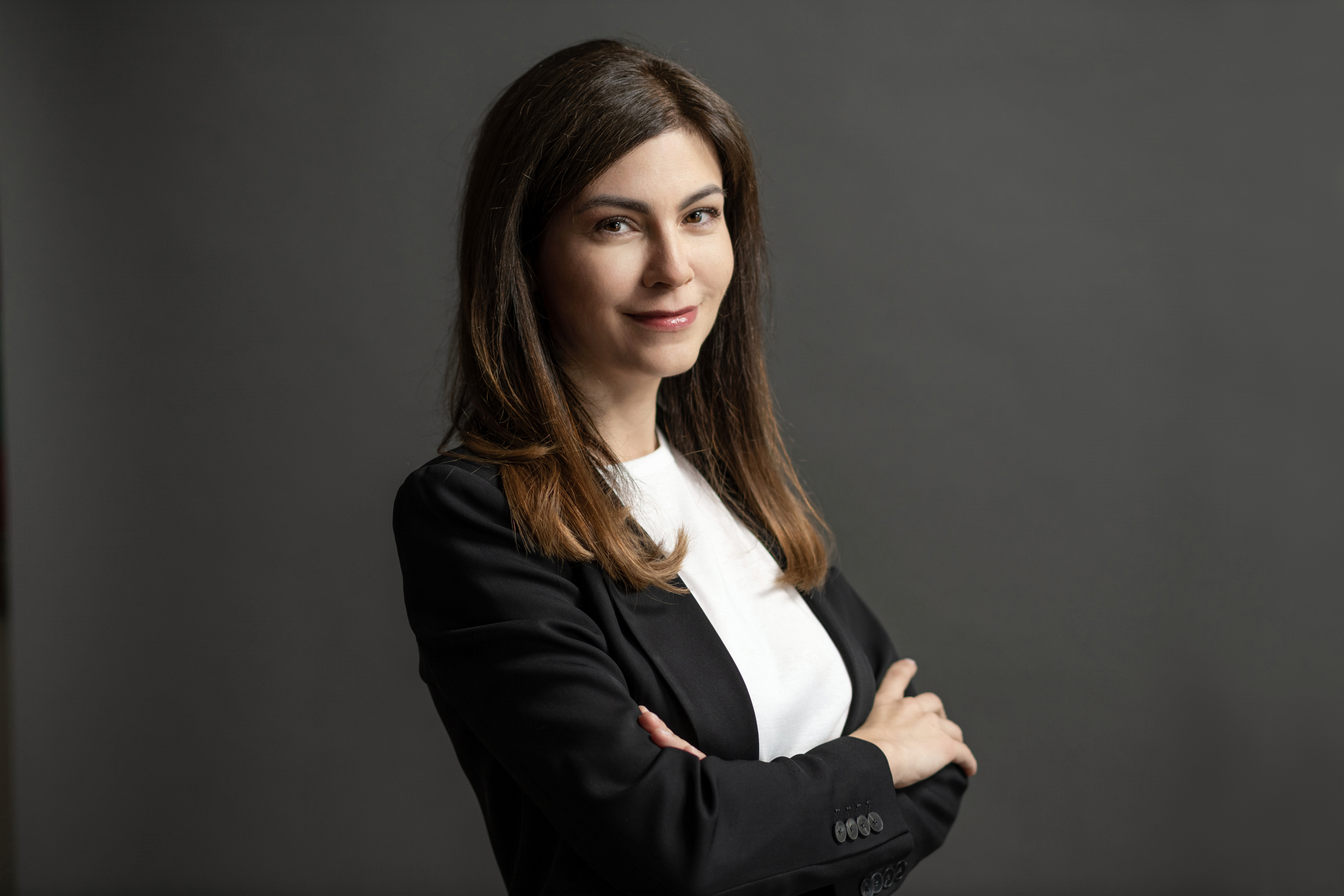
Kameliya Mineva is Chairperson of the Management Board and Executive Director of ProCredit Bank. For more than 16 years, she has considered the bank her “second home.” For her, work is not a physical place but “something your heart belongs to.”
Her career combines leadership roles in bank branches, responsibility for business clients, and international experience as part of the credit risk team at ProCredit Holding, Germany. Since December 2019, she has been a member of the Management Board, and today she leads the Bank as Chair of the Management Board and Executive Director.
This year, ProCredit Bank celebrates its 25th anniversary - the occasion for our conversation.
Are 25 years a long time in banking?
Both yes and no. They certainly pass quickly. We have always been a different type of bank in every respect. We are not among the five largest institutions, but we are undoubtedly number one in innovation - bold and constantly changing.
From the very first day on the Bulgarian market, we began financing businesses, primarily micro and small enterprises. Twenty to twenty‑five years ago, very few banks did this. At that time, many businesses lacked formal financial statements.
We visited clients onsite - and still do - but back then, imagine us entering a warehouse, counting everything the company owned, reviewing handwritten notebooks where the owner literally noted “took this, gave that.” And we attempted to prepare an analysis to be able to finance them.
In this context, the transformation over the past 25 years has been profound.
Our internal structure changed, and so did the team. We once operated with a large branch network - more than 70 branches. Around 2008–2009, at the peak, we had nearly 2,000 employees.
Later, we underwent a complete transformation toward digitalization and branch reduction - from almost 2,000 employees to 370 - without compromising the bank’s performance, stability, or security. On the contrary. Today, we manage over EUR 2 billion in assets, and in 2025 we received the “Banker of the Year” award in this category. Our team now consists of just over 600 dedicated professionals.
When you say you are a different kind of bank, how would you describe that?
Beyond being innovative and bold, we stand out through our team and our strong, sportsmanlike culture. You can sense it the moment you enter the bank.
Clients and new colleagues consistently remark on our distinctive corporate culture - strong, deeply rooted, reflected in our communication style, our lack of rigid hierarchy, and the absence of heavy systems.
This has supported us through every major change.
How did you join the bank? What were your expectations and what did you find?
I applied for an internship 16 years ago.
I remember one of the interviews vividly - it surprised me. There was a mathematical and logic test.
I had studied Economics and Finance in England, but they began by asking about the Bulgarian chart of accounts. To this day, I remember being asked what account 241 was.
I had no idea. I hadn’t studied the system in Bulgarian, and I couldn’t answer. I was certain the interview would end in rejection.
Instead, I was told that what mattered wasn’t the theoretical knowledge or what you had studied, but the ability to think logically and the willingness to work. That impressed me, and I was offered the position.
In the first six months, I worked in three different cities - Stara Zagora, Haskovo, and Sofia - in different departments. It was so intense that sometimes I thought, “This is too much; maybe I will quit.”
But learning something new every day, seeing how committed colleagues were to teaching me, how open they were, how they even allowed me to make mistakes while learning - that kept me here.
How are difficult decisions made - reducing staff, reducing branches, shifting toward digitalization?
All major decisions are challenging. We rely heavily on middle management. When change is needed, they always participate. Once we are aligned on the goal, we know it can be implemented throughout the organization.
Digitalization brought many obstacles. We started 10 years ago. Today, it’s normal to use a phone or a card for everything, but it wasn’t then. Clients struggled with the idea of not visiting a cashier or not chatting for five minutes.
There was resistance. It is human nature - habits are hard to break, not only in banking but in life.
Two things helped us: we do not give up, and when we are convinced of a change, we don’t retreat at the first sign of difficulty. It wasn’t just a matter of installing machines - we had to invest heavily in communication, explaining why it was useful, how it saved time, how it reduced operational errors.
Was digitalization the hardest decision?
Not the only one. Another challenging step was eliminating paper usage. This change was driven not by digitalization but by the desire to reduce our environmental footprint.
It was difficult. We were used to printing so many things - only to discard them the next day.
We imposed limits on offices; some colleagues were unhappy and wrote directly to the Management Board asking for higher paper quotas.
It was a complex process.
We are very often involved in operational work - another difference compared to other institutions. At our bank, the Management Board works in the office, handles cases, implements changes, meets with colleagues. This differs from institutions where leadership is mainly strategic or PR‑focused.
Sometimes, despite disagreements, when you want to drive change, you must find balance between feedback and the need to act firmly.
I am convinced that after digitalization, our commitment to environmental responsibility is another domain where we lead by example. We began 10 years ago and now have numerous awards recognizing our consistency and achievements.
I’m not fond of the term ESG - the acronym has become overly fashionable lately.
The green transition appears to clients primarily as optimization, but it is broader - especially in Bulgaria - and tied to workforce shortages.
Finding qualified people, training them, improving working conditions - more and more clients think about this. How safe a production site should be, what benefits to add beyond net pay so people remain after being trained.
How do you choose between faster growth and not making compromises?
We have never pursued rapid growth at any cost.
We have always aimed for stable, long‑term, moderate growth.
It may sound unusual, as banks are often associated with big increases in profit and customer numbers.
But that is not our primary goal. We want growth that does not come at the expense of customer service.
We constantly monitor what clients say about us, how they feel, whether they are well served. That matters far more than attracting large numbers of dissatisfied clients.
You are a young team, with many women on the Management Board. Was this intentional?
I would say we are setting a benchmark on the market that larger companies can learn from.
People stay with us for more than 10 years on average; for managers, the average is 17. The face of a bank is not its offices or even its headquarters.
Despite technology and digitalization, a bank ultimately relies on its team, expertise, and proximity to clients.
Whether you have a branch or not does not determine closeness to businesses. You are close when you can provide the right advice. And we can.
It is much more convenient when we visit clients. We know their businesses, structures, aspirations, and plans for the next two years so well that it doesn’t matter whether they visit our office.
There are many elements of banking beyond the numbers. We have seen businesses with excellent indicators fail because of poor organization or overly risky management.
And such issues are most visible when you maintain direct contact with companies.
Were you surprised by the amount of money entering the banking sector in December?
Not by the amount - we know the figures - but by the timing.
The entire banking sector launched major campaigns, constantly reminding clients to begin converting their cash - and there are still several months to do so.
What surprised me was the volume deposited specifically on December 29 and 30, despite the sector’s efforts to distribute the process more evenly.
The numbers are not secret. We know how much money is in circulation and how much is in banks. The difference is clear. But the speed at which it happened between Christmas and New Year - that surprised me.
What should consumers expect from banks when such large inflows occur?
With this level of liquidity and inflow, we certainly do not expect interest rates to increase - neither on deposits nor on loans.
Looking ahead - what do the next years look like for you? Will consolidation in the Bulgarian banking sector continue?
Most likely yes. The market is not that large.
Competition for market share to improve efficiency is natural.
Scale and size help optimize operations and profitability.
So the trend will likely continue.
As for us - we have launched several new initiatives.
For 25 years we have been known as “the bank for businesses,” but we now want to be much more. Together with the other banks in the international ProCredit group, we created ProConnect - an international business‑networking platform opening doors for our business clients to new markets and strategic partnerships. We aim to offer value‑added services so we are not only “the bank for businesses,” but a true partner - providing what they need: new markets, new counterparties, and opportunities to expand internationally.
In the past 2-3 years, we have also expanded our services to individuals, but with a very different approach to retail banking.
In Bulgaria, individuals are typically associated with a large branch network, but we want something much closer to fintech - a fully digital journey.
Even in an advanced sector, we are the first bank to implement a fully end‑to‑end digital process.
Often I hear: “We are digital… but you must pick up your card at the office.” With us, this does not exist.
Opening an account is online, applying for a loan is online. Identification is online, and you receive your card at home via courier.
At the same time, we are available for consultations and support. We will also seek ways to reach younger clients and their new expectations.
This is the way we want to work with individuals.
In 2023, we received an award for digitalization and transformation of the banking sector.
Innovation is part of our DNA. And these 25 years have given us the confidence to be bold and to stand among the companies that set the trends.